How to Track Keyword Rankings Effectively: The Definitive Guide for 2025
Master keyword rank tracking with our comprehensive guide. Learn how to analyze SERP volatility, monitor AI Overviews, and turn ranking data into SEO growth.
How to Track Keyword Rankings Effectively: The Definitive Guide
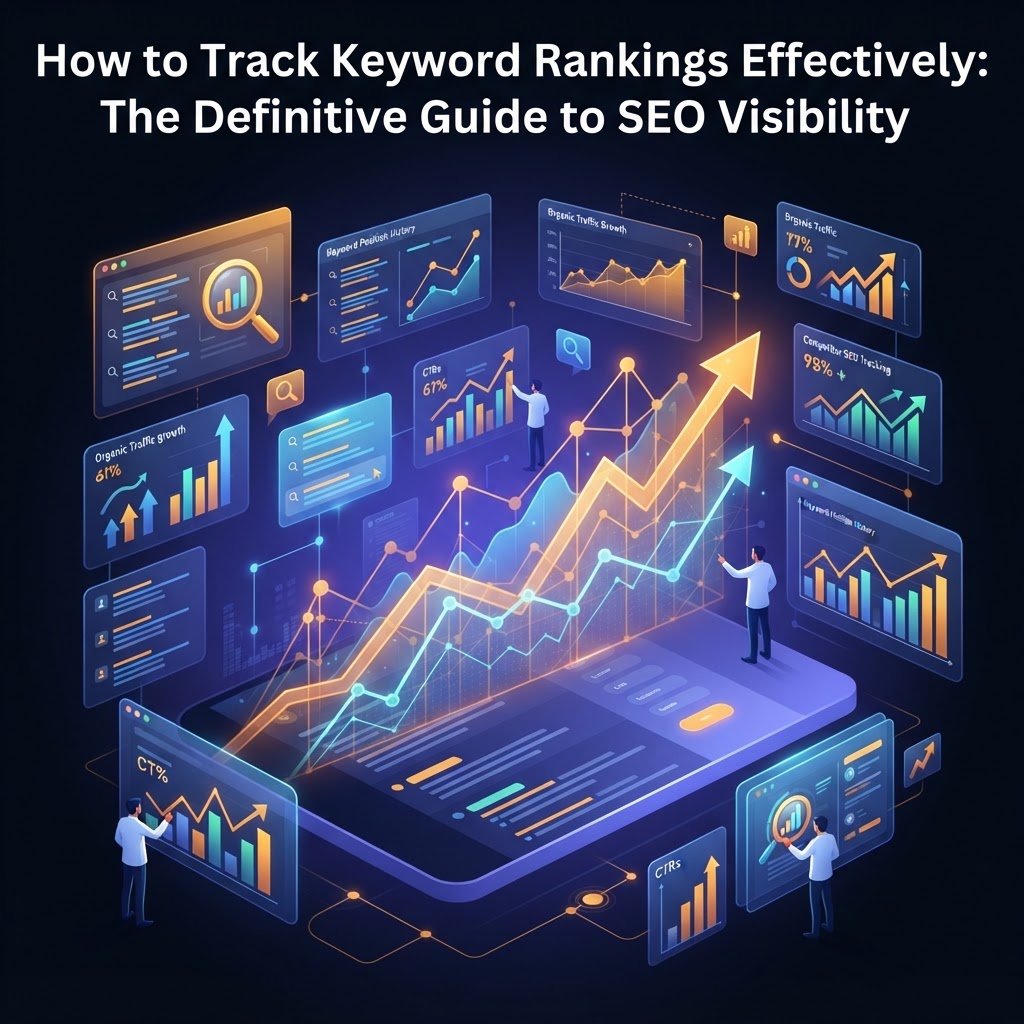
In the world of SEO, tracking your keyword rankings is often compared to a pilot monitoring their flight instruments. Without accurate data, you are essentially flying blind, unable to tell if your strategy is ascending toward the first page or plummeting toward obscurity.
However, effective rank tracking is no longer just about watching a single number move from position #10 to #5. In an era of AI Overviews, localized results, and hyper-volatile SERPs, you need a sophisticated approach to data. This guide will teach you how to track keyword rankings with precision, analyze the "why" behind the shifts, and turn raw data into actionable growth.
Why Rank Tracking Still Matters (and How It’s Changed)
Some SEOs argue that because search results are now so personalized, "rankings don't matter." This is a misconception. While a user in New York might see a slightly different SERP than a user in London, tracking rankings remains the most reliable way to measure the health and momentum of your SEO efforts.
According to industry data, a page that slips from position 3 to position 8 can lose up to 60% of its organic traffic overnight. By tracking rankings effectively, you can:
- Identify "Striking Distance" Opportunities: Find keywords stuck on page 2 (positions 11–20) where a small content refresh or a few high-quality backlinks could trigger a massive traffic spike.
- Detect Algorithm Hits Early: Spotting a sitewide drop in rankings allows you to react to Google algorithm updates before the revenue loss becomes catastrophic.
- Monitor Competitor Moves: When a rival outranks you for a "money keyword," rank tracking provides the early warning signal needed to analyze their content and respond.
Step 1: Selecting the Right Keywords to Track
You cannot—and should not—track every single keyword your site ranks for. Tracking millions of irrelevant terms dilutes your data and wastes resources. Instead, focus on these four categories:
- Money Keywords: High-intent terms that directly drive conversions, sales, or leads.
- Brand Terms: Your company name and product names. You must own these results to protect your reputation.
- Informational Pillars: High-volume "how-to" or "what is" terms that fuel your top-of-funnel traffic.
- Striking Distance Keywords: Terms currently ranking in positions 11–25 that have high search volume.
Pro Tip: Avoid tracking broad, one-word terms like "marketing" or "backpack." These are often too competitive to be useful and don't reflect specific user intent How to Track Keywords: Tips, Examples & Checklist.
Step 2: Building Your SEO Tracking Stack
To get a 360-degree view of your performance, you need a combination of "ground truth" data and competitive intelligence tools.
Google Search Console (The Ground Truth)
Google Search Console (GSC) is the only tool that provides data directly from Google. It shows you exactly how many impressions and clicks you received for specific queries. However, GSC data is often delayed by 48 hours and doesn't show you where your competitors are ranking.
Professional Rank Trackers
Tools like Ahrefs Rank Tracker and Semrush Position Tracking allow you to monitor daily movements, track mobile vs. desktop rankings, and see how you stack up against up to 10 competitors simultaneously. These tools are essential for understanding the competitive landscape.
Automation and Scaling
For agencies managing multiple campaigns, manual tracking is impossible. This is where automated engines like AAA Backlinks come into play. By integrating content creation and backlink management with performance data, you can scale your strategy without getting bogged down in spreadsheets AAA Backlinks.
Step 3: Advanced Tracking Strategies for 2025
Modern SEO requires looking beyond the standard blue links. To track effectively today, you must monitor these advanced elements:
1. AI Overviews (SGE)
Google’s AI Overviews often appear above traditional organic results. If an AI summary is answering the user's query, your click-through rate (CTR) for the #1 position may drop. Use tools that specifically flag which of your tracked keywords trigger an AI Overview and whether your site is cited as a source How to Track Keywords: Tips, Examples & Checklist.
2. SERP Feature Ownership
Rankings are no longer just 1 through 10. You should track your visibility in:
- Featured Snippets: The "Position Zero" result.
- Local Packs: Essential for brick-and-mortar businesses.
- People Also Ask (PAA): Great for identifying new content subtopics.
- Video Carousels: If you are investing in YouTube content.
3. Segmentation and Tagging
Don't look at your rankings as one giant bucket. Segment your keywords by product category, intent (Informational vs. Transactional), or priority level. This allows you to see, for example, that while your "Blog" rankings are up, your "Product Page" rankings might be slipping Rank tracker: The ultimate guide to monitoring keyword rankings.
Step 4: How to Analyze Ranking Fluctuations
When you see a drop in rankings, don't panic. Use this diagnostic framework to determine the cause:
- Is it a "Google Dance"? Small fluctuations (1–3 positions) are normal as Google tests different results. Ignore these and focus on long-term trends.
- Is it a Technical Issue? Check for 404 errors, accidental no-index tags, or server downtime. A sudden drop to position 100+ usually indicates a technical block or a penalty.
- Did a Competitor Improve? If you drop from #2 to #5, look at the pages that jumped over you. Did they add more depth? Did they secure new high-authority backlinks? Keyword Rankings: What They Are & How to Check Yours.
- Is it Search Intent Shift? Sometimes Google decides that a keyword which used to require a blog post now requires a product page. If your content type no longer matches the SERP intent, you will lose rank regardless of your content quality.
Practical Takeaways for Your Workflow
- Check Weekly, Not Daily: Daily checking can lead to over-optimization based on temporary volatility. A weekly cadence is usually best for most businesses Rank Tracking: How To Do It The Right Way.
- Focus on Share of Voice (SoV): Instead of individual positions, look at your overall visibility in your niche compared to competitors.
- Connect Rankings to Revenue: Use a dashboard to show how ranking gains in specific categories correlate with increases in leads or sales. This proves the ROI of your SEO efforts to stakeholders.
Key Takeaways
- Quality Over Quantity: Track keywords that align with business goals, not just high-volume vanity terms.
- Monitor SERP Features: AI Overviews and Featured Snippets are just as important as traditional blue links.
- Use the Right Tools: Combine Google Search Console for accuracy with third-party tools like Ahrefs, Semrush, or AAA Backlinks for competitive insights and automation.
- Analyze the "Why": When rankings shift, investigate intent changes, competitor updates, and technical health before making drastic changes.
FAQ
Q: How often should I check my keyword rankings? A: For most sites, a weekly check is ideal. It provides enough data to see trends without reacting to the daily "noise" of SERP volatility. However, during a major product launch or algorithm update, daily monitoring may be necessary Rank Tracking: How To Do It The Right Way.
Q: Why does Google Search Console show a different position than my rank tracking tool? A: GSC reports an average position based on actual user impressions, which includes localized and personalized results. Third-party tools usually simulate a "clean" search from a specific location. Both are valuable, but they measure slightly different things.
Q: What should I do if my rankings suddenly drop? A: First, check for technical errors (like robots.txt blocks). Second, check SEO news sites to see if a Google algorithm update is underway. Third, compare your content to the pages that are now outranking you to see if the search intent has shifted Keyword Ranking Analysis: How to Track and Improve Your SEO Rankings.
Tags