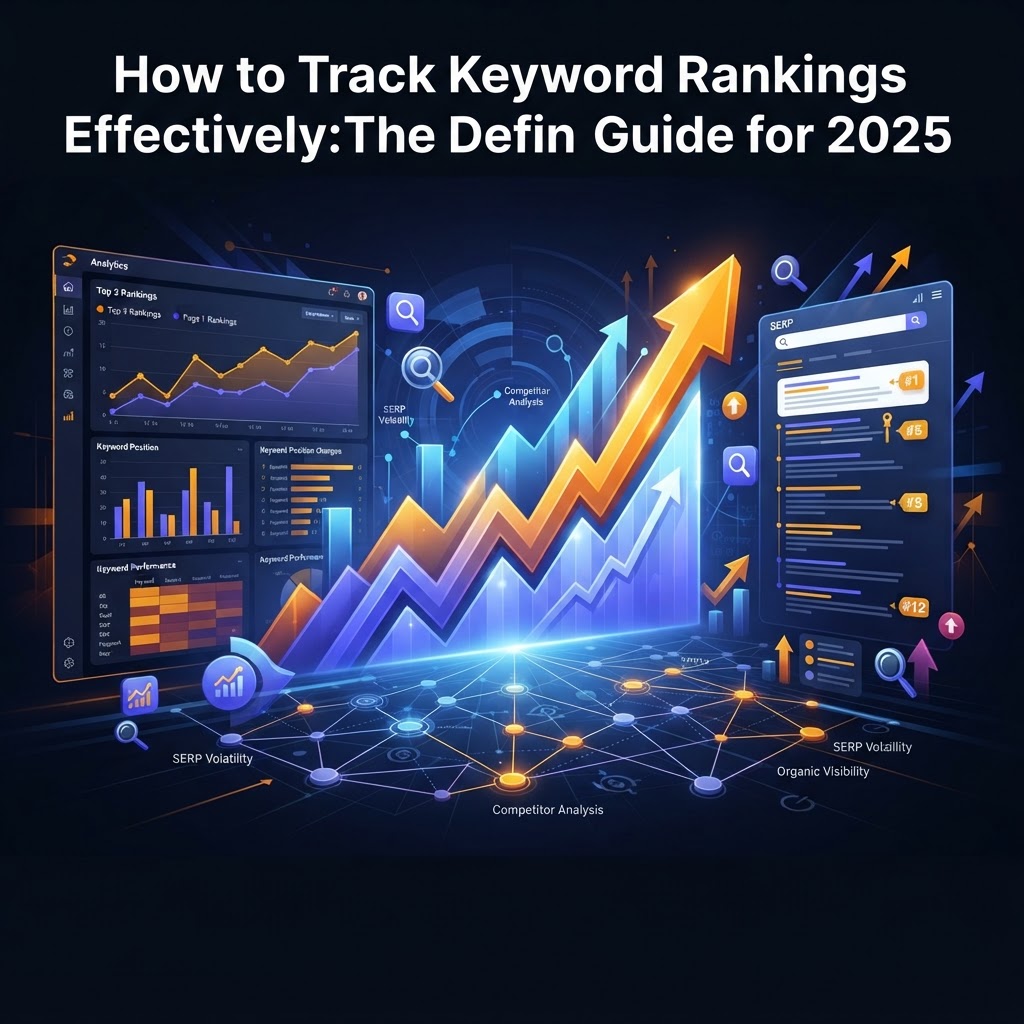
How to Track Keyword Rankings Effectively: The Definitive Guide for 2025
Master keyword rank tracking with our comprehensive guide. Learn how to analyze SERP volatility, use the right tools, and turn ranking data into SEO growth.
How to Track Keyword Rankings Effectively: The Definitive Guide
In the world of SEO, rankings are often viewed as the ultimate scoreboard. However, tracking keyword rankings effectively is about much more than watching a number move from position #10 to position #4. It is about understanding searcher intent, monitoring market volatility, and identifying the specific levers you need to pull to drive revenue.
If you aren't tracking your rankings with precision, you are essentially flying blind. This guide will move beyond the basics to show you how to build a professional-grade tracking strategy that informs your entire digital marketing roadmap.
Why Keyword Tracking is More Than a Vanity Metric
Many marketers dismiss rankings as "vanity metrics," arguing that traffic and conversions are all that matter. While revenue is the end goal, keyword rankings serve as the leading indicator of SEO health.
According to industry data, the first three organic results capture over 50% of all click-throughs. If your high-intent keywords drop from position #2 to #6, your traffic will plummet long before you see the impact in your bank account. Effective tracking allows you to:
- Identify Algorithm Impacts: Spot site-wide drops that indicate a Google Core Update hit.
- Measure Content Decay: Recognize when older content loses relevance and needs a refresh.
- Benchmark Against Competitors: See who is "sneaking up" on your top-performing terms.
- Validate ROI: Prove that your link-building or technical SEO efforts are actually moving the needle.
1. Choosing Your Source of Truth: GSC vs. Third-Party Tools
To track effectively, you must understand that not all data is created equal. Professional SEOs typically use a combination of two data sources.
Google Search Console (GSC)
Google Search Console provides "first-party" data. It tells you exactly how many people saw your site and clicked it. However, GSC reports an average position over a period of time. If you rank #1 in the morning and #20 in the evening, GSC might report a #10.
Third-Party Rank Trackers
Tools like Ahrefs Rank Tracker or Semrush Position Tracking provide "snapshots." They simulate a user search at a specific moment to give you a precise rank.
For agencies managing multiple campaigns, automated engines like AAA Backlinks can help bridge the gap by identifying which keywords are currently ranking in "striking distance" (positions 4–10) so you can prioritize them for automated backlink scaling.
2. Setting Up a Strategic Tracking Workflow
Tracking every single keyword your site ranks for is a recipe for data fatigue. Instead, segment your keywords into logical groups.
The Three-Tier Tracking System
- Money Keywords (Daily Tracking): These are high-volume, high-intent terms that directly drive sales. You need to know the moment these fluctuate.
- Content Pillars (Weekly Tracking): Keywords related to your main educational guides or hub pages.
- Long-Tail/Experimental (Monthly Tracking): New keywords you are testing or low-volume terms that support your topical authority.
Segmentation by Intent
Don't just track by volume; track by search intent. Group your keywords into:
- Informational: "How to track rankings"
- Commercial: "Best rank tracking software"
- Transactional: "Buy SEO tool subscription"
3. Monitoring SERP Features and AI Overviews
In 2025, ranking #1 isn't always enough. The "zero-click search" is rising, where users get their answers directly from the search results page via Featured Snippets or AI Overviews.
When tracking, you must monitor SERP Features. If you rank #1 but a massive AI Overview and a "People Also Ask" block push your result below the fold, your CTR will be lower than a traditional #3 result.
Actionable Strategy: Use tools to identify keywords where you rank in the top 10 but do not own the Featured Snippet. These are your biggest opportunities for quick traffic gains. As noted in AAA Backlinks' guide to snippets, winning these spots often requires specific formatting like bulleted lists or concise definitions.
4. Analyzing Competitor Movements
Rank tracking is a relative game. If your ranking drops, you need to know if you got worse or if a competitor got better.
Effective competitor tracking involves:
- Identifying Newcomers: Spotting new domains that are suddenly climbing for your target terms.
- Content Gap Analysis: Seeing which keywords your competitors rank for that you don't.
- Reverse-Engineering Success: If a competitor jumps to #1, use the Wayback Machine to see what changes they made to their page content or structure.
5. How to React to Ranking Fluctuations
Rankings are volatile by nature. Before you panic and rewrite your entire page, follow this diagnostic checklist:
- Check for "Google Dance": Small fluctuations (1-3 positions) are normal. Wait 3-5 days to see if the rank stabilizes.
- Verify Search Intent: Has Google changed what it thinks users want? If a keyword that used to show blog posts now shows product pages, your blog post will likely never rank #1 again for that term.
- Audit Technical Health: Check for 404 errors, broken redirects, or slow loading speeds on the declining page.
- Assess Backlink Velocity: Are your competitors gaining high-quality links faster than you? Strengthening your backlink strategy is often the key to breaking through a ranking plateau.
Key Takeaways
- Don't rely solely on GSC: Use a dedicated rank tracker for real-time, localized data.
- Track Intent, Not Just Terms: Group keywords by their stage in the buyer's journey.
- Watch the SERP, Not Just the Rank: Monitor AI Overviews and Featured Snippets that steal clicks.
- Cadence Matters: Track high-value "money" keywords daily and evergreen content weekly or monthly.
- Analyze the "Why": When rankings drop, distinguish between algorithm updates, competitor improvements, and technical issues.
Frequently Asked Questions
Q: How often should I check my keyword rankings?
A: For most businesses, a weekly check is sufficient. However, for high-stakes commercial keywords or during a major Google update, daily monitoring is recommended to catch volatility early.
Q: Why does my rank tracker show a different position than my manual Google search?
A: Google personalizes results based on your location, search history, and device. Rank trackers use "clean" browsers and specific IP addresses to provide a standardized, objective result.
Q: Does a drop in rankings always mean I need to change my content?
A: Not necessarily. A drop could be caused by a loss of backlinks, a technical site error, or a competitor simply out-optimizing you. Always diagnose the cause before making drastic content changes.
Tags