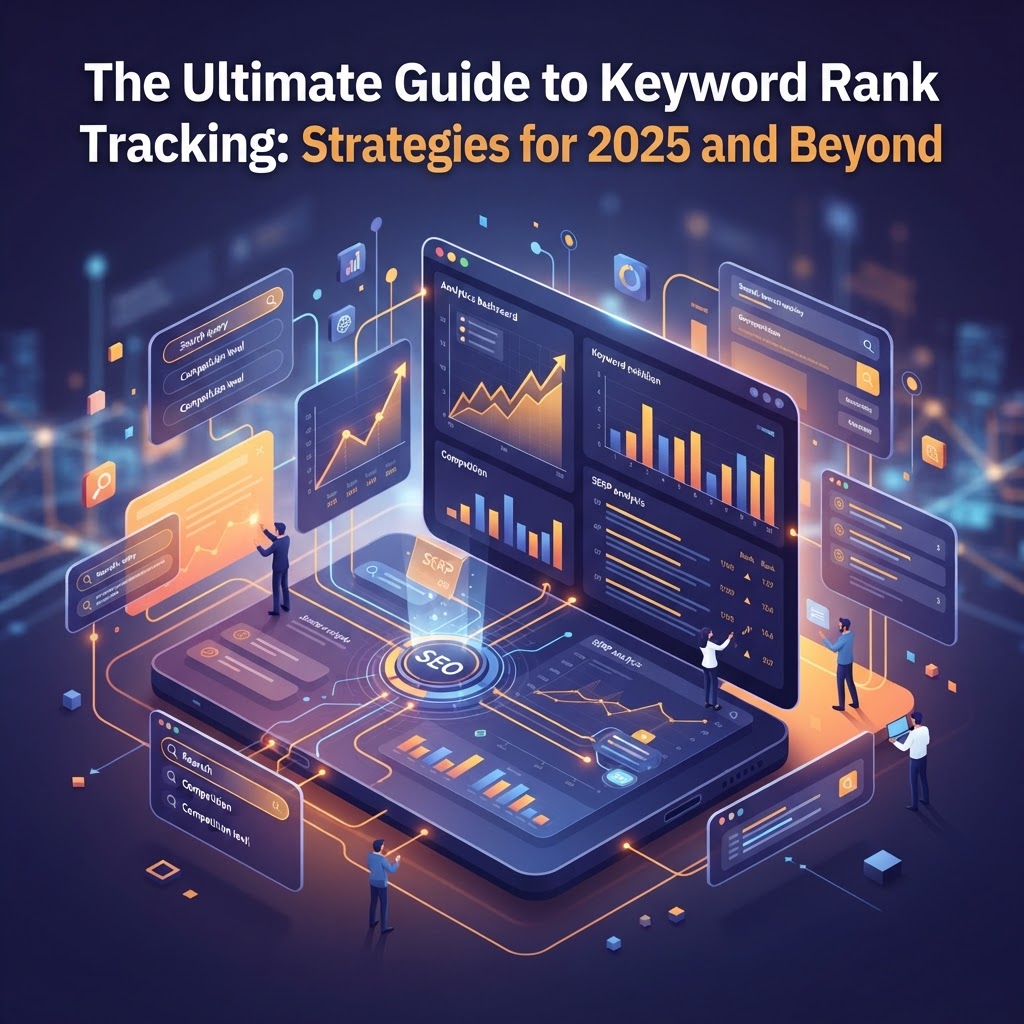
The Ultimate Guide to Keyword Rank Tracking: Strategies for 2025 and Beyond
Master keyword rank tracking with our comprehensive guide. Learn how to monitor SERP positions, analyze competitor data, and turn insights into organic growth.
The Ultimate Guide to Keyword Rank Tracking: Strategies for 2025 and Beyond
In the world of SEO, data is the only compass that matters. Without it, you are essentially flying blind, hoping that your content and backlink efforts eventually land you on the first page of Google.
However, many marketers fall into the trap of checking their rankings manually or obsessing over "vanity metrics" that don't actually move the needle. Effective keyword tracking is about more than just seeing a number next to a search term; it’s about understanding search intent, monitoring competitor shifts, and identifying "striking distance" opportunities that can lead to immediate traffic gains.
This guide will walk you through the professional framework for tracking keyword rankings effectively, ensuring your SEO strategy is backed by actionable insights.
Why Rank Tracking Still Matters in the Age of AI
With the rise of AI Overviews and highly personalized search results, some have argued that traditional rank tracking is becoming obsolete. This couldn't be further from the truth.
According to industry data, the first three organic results still capture over 50% of all clicks. While the SERP (Search Engine Results Page) layout is changing, your position remains the primary indicator of your site's authority and visibility. Effective tracking allows you to:
- Identify Algorithm Impacts: Sudden drops across a specific category of keywords often signal a Google core update or a technical issue.
- Measure ROI: By connecting rank improvements to traffic and conversions, you can justify your SEO budget.
- Spot Competitor Moves: If a competitor suddenly jumps ahead of you, tracking helps you analyze their new content or backlink strategy immediately.
1. Categorizing Your Keywords for Better Analysis
One of the biggest mistakes beginners make is tracking every keyword in one giant, unorganized list. To gain meaningful insights, you must segment your keywords. According to SEO Scout, you should at least distinguish between branded and non-branded terms.
Branded Keywords
These are searches that include your company name (e.g., "AAA Backlinks pricing"). You should almost always rank #1 for these. If you don't, it’s a sign of a serious technical issue or a highly aggressive competitor bidding on your brand name.
High-Intent (Bottom of Funnel) Keywords
These are keywords where the user is ready to buy or convert (e.g., "best link building service"). These are your most valuable terms and require daily monitoring.
Informational (Top of Funnel) Keywords
These are "how-to" or "what is" queries. While they may not convert immediately, they build brand authority and feed your remarketing funnels.
2. Choosing the Right Tech Stack
Effective tracking requires a mix of direct data from Google and third-party tools that provide historical context and competitor benchmarks.
Google Search Console (The Source of Truth)
Google Search Console (GSC) is the only tool that provides data directly from Google. It shows you the actual average position of your pages based on real user impressions.
- Pros: 100% accurate data, free to use.
- Cons: Data is often delayed by 48 hours; it doesn't show competitor rankings.
Professional Rank Trackers
To get a complete picture, you need a dedicated rank tracker. Tools like Ahrefs and Semrush allow you to monitor rankings across 190+ locations and track both mobile and desktop positions.
For agencies managing multiple campaigns, automated engines like AAA Backlinks can complement these tools by helping you scale the content and link-building efforts needed to move those rankings once they are identified.
3. Advanced Tracking Strategies
To track like a pro, you need to look beyond the simple "Position" column. Here are three advanced strategies used by top SEO agencies:
A. Monitor SERP Features
Modern SEO isn't just about blue links. You need to track if your keywords trigger:
- Featured Snippets: The "Position 0" result.
- People Also Ask (PAA): Great for identifying new content ideas.
- AI Overviews: Monitoring if your site is cited as a source in Google's AI responses is a critical new metric for 2025 (AgencyAnalytics).
B. Track "Striking Distance" Keywords
This is one of the most effective ways to get quick wins. Filter your rank tracker to show keywords where you rank in positions 11 through 20. These pages are on the second page of Google. Often, a simple update to the meta tags, adding a few internal links, or securing a high-quality backlink can push these terms to page one, resulting in a massive traffic spike.
C. Share of Voice (SoV)
Instead of looking at individual keywords, look at your "Share of Voice" in your niche. This metric calculates how much of the total search volume for your target keywords is going to your website versus your competitors. It is a much better indicator of market dominance than a single #1 ranking.
4. Setting a Reporting Cadence
How often should you check your rankings?
- Daily: Only for your top 5-10 "money" keywords where volatility could mean a significant loss in revenue.
- Weekly: The sweet spot for most SEOs. It allows you to see trends without getting distracted by daily "noise" or minor fluctuations.
- Monthly: Best for high-level reporting to stakeholders and analyzing long-term growth trends.
5. Common Pitfalls to Avoid
- Obsessing Over Daily Fluctuations: Google’s algorithm is constantly testing results. A drop from #3 to #5 on a Tuesday doesn't necessarily mean you've done something wrong. Look at the 30-day trend instead.
- Ignoring Localization: Search results in New York are different from results in London. If you are a local business, ensure your tracker is set to the specific ZIP code or city you serve (BrightEdge).
- Neglecting Mobile Rankings: Over 60% of searches happen on mobile. If you only track desktop rankings, you are missing more than half of the picture.
Key Takeaways
- Segment your keywords into branded, informational, and high-intent groups to make data actionable.
- Use Google Search Console for accurate internal data and a third-party tracker for competitor insights.
- Focus on "Striking Distance" keywords (positions 11-20) for the fastest traffic gains.
- Track SERP features, not just blue links, to understand how AI and snippets are impacting your visibility.
- Look at trends, not daily shifts. SEO is a marathon, and long-term visibility is the goal.
Frequently Asked Questions (FAQ)
1. Why do my rankings look different in my browser than in my rank tracker?
Search results are highly personalized based on your browsing history, location, and even the device you are using. Rank trackers use "clean" browsers and specific IP addresses to provide an unbiased, objective view of where you stand for the average user.
2. How long does it take to see ranking changes after optimizing a page?
It typically takes anywhere from a few days to several weeks. Google needs to re-crawl the page, process the changes, and then test the page in the SERPs. For highly competitive terms, it may take months of consistent effort and backlink building to see significant movement.
3. Is it better to track 100 keywords or 1,000?
Quality over quantity. It is better to track 100 keywords that actually drive revenue and business goals than 1,000 keywords that have no search volume or intent. Start with your core "money" terms and expand as your content library grows.
Tags