How to Get Your Blog Posts Indexed Faster: The Definitive SEO Guide
Struggling with slow Google indexing? Discover expert strategies to get your blog posts indexed faster using technical SEO, sitemaps, and automated backlinks.
How to Get Your Blog Posts Indexed Faster: The Definitive SEO Guide
In the world of digital marketing, content that isn’t indexed is effectively invisible. You can spend dozens of hours researching, writing, and polishing a masterpiece, but if Googlebot doesn’t crawl and index that URL, you won't see a single visitor from organic search.
For many webmasters, the waiting game is the most frustrating part of SEO. Sometimes Google indexes a post within minutes; other times, it takes weeks. If you want to take control of your visibility, you need a proactive strategy. This guide explores the most effective, expert-level techniques to accelerate the indexing process.
1. Leverage Google Search Console (The Direct Approach)
The most immediate way to notify Google of new content is through the URL Inspection Tool in Google Search Console (GSC).
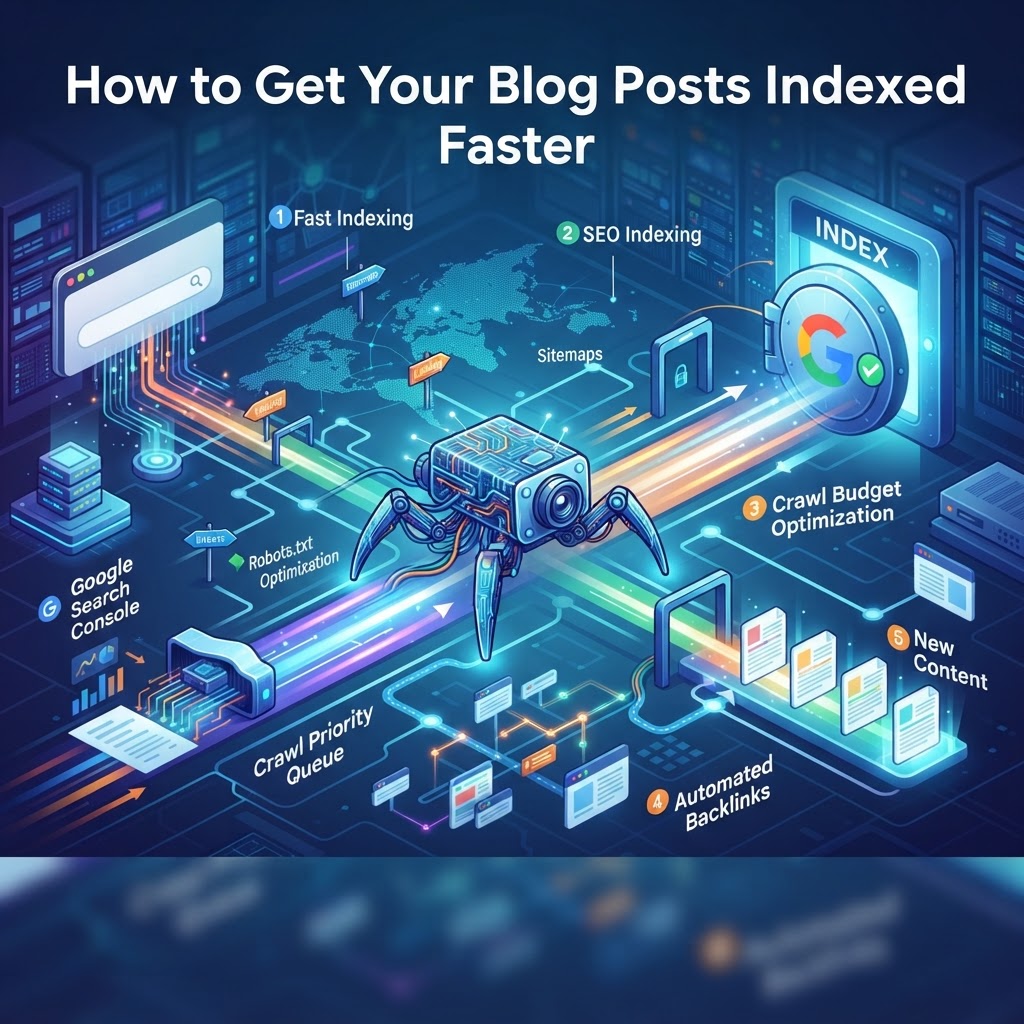
By pasting your new blog post URL into the search bar at the top of GSC, you can see its current status. If it's not indexed, simply click "Request Indexing." While this doesn't guarantee instant results, it places your URL in a priority queue for crawling.
Pro Tip: Ensure your XML Sitemap is updated and submitted in GSC. A dynamic sitemap tells Google exactly where to find your latest content without it having to hunt for it.
2. Build High-Quality Backlinks Immediately
Google discovers most of its content by following links from one page to another. If a high-authority site links to your new post, Googlebot will follow that link and discover your content almost instantly.
However, manual link building is time-consuming and often yields slow results. To scale this process, many SEO professionals turn to automation. Using a platform like AAA Backlinks allows you to generate high-quality, contextual backlinks that serve as "beacons" for search engine crawlers. By creating an immediate footprint of external signals, you drastically reduce the time it takes for Google to recognize and index your new URLs.
3. Optimize Your Internal Linking Structure
Don't overlook the power of your own domain. If you have an established page that already receives high traffic and frequent crawls from Google, use it to your advantage.
- Link from the Homepage: Temporarily featuring new posts on your homepage gives them maximum exposure to bots.
- Category Pages: Ensure your new post is correctly categorized so it appears on high-level archive pages.
- Contextual Internal Links: Find an older, well-indexed post that is relevant to your new topic and add a link to the new post. This passes "link juice" and discovery paths internally.
4. Utilize the Google Indexing API
While originally designed for Job Postings and Broadcast Events, many advanced SEOs use the Google Indexing API to trigger crawls for regular blog posts. This requires some technical setup via Google Cloud Console, but it is one of the fastest ways to get a URL noticed. By sending a direct POST request to Google's API, you are explicitly telling the engine that a page is live and ready for inspection.
5. Master Your Crawl Budget
Google doesn't have infinite resources. It assigns a "crawl budget" to every website—a limit on how many pages it will crawl in a given timeframe. If your site is bloated with low-quality pages, redirect loops, or broken links, Googlebot might waste its budget before it ever reaches your new blog post.
To optimize your crawl budget:
- Fix 404 Errors: Use tools to identify and repair broken links.
- Noindex Low-Value Pages: Use the
noindextag for tag pages or thin content that doesn't need to be in search results. - Improve Site Speed: A faster server allows Googlebot to crawl more pages in less time.
6. Social Signals and Pinging Tools
While social media links are generally "no-follow," they still provide traffic and visibility. Sharing your new content on platforms like Twitter (X), LinkedIn, and Pinterest can lead to faster discovery.
Additionally, you can use "pinging" services. These services send a notification to various search engines and aggregators that your site has been updated. While less powerful than a backlink from a reputable source, it’s a quick, free step in a comprehensive indexing strategy.
Summary: The Secret to Long-Term Indexing Speed
Speeding up Google indexing is about reducing friction. By combining technical optimizations (Sitemaps and APIs) with strong external signals, you create an environment where Google cannot ignore your content.
For most site owners, the bottleneck is authority and discovery. Utilizing AAA Backlinks to automate your backlink generation ensures that every time you hit "publish," a network of links is already working to bring Googlebot straight to your door. Stop waiting for the crawlers—invite them in.
Tags