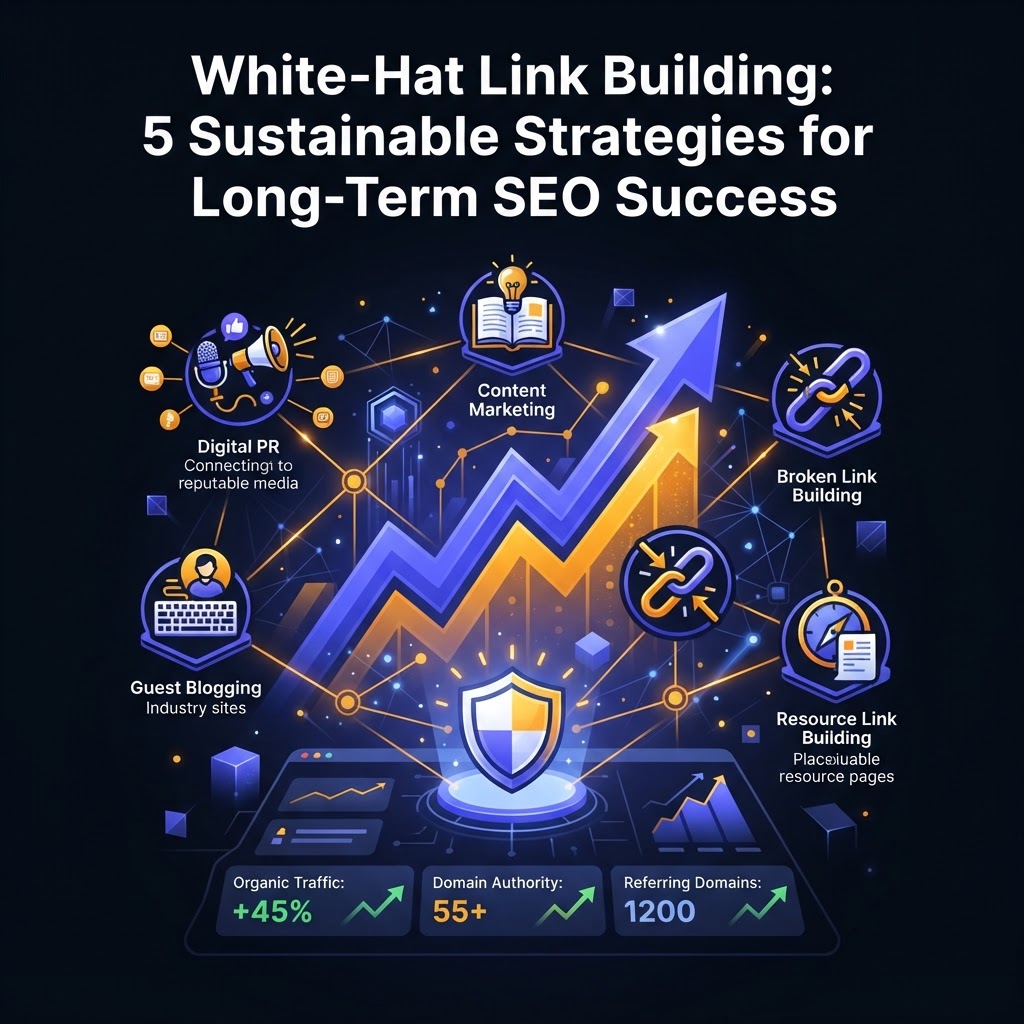
White-Hat Link Building: 5 Sustainable Strategies for Long-Term SEO Success
Master ethical white-hat link building. Learn 5 proven, long-term strategies to earn high-authority backlinks that survive algorithm updates and drive rankings.
White-Hat Link Building: 5 Sustainable Strategies for Long-Term SEO Success
In the early days of SEO, link building was often a game of volume. If you could generate thousands of links—regardless of quality—you could dominate the Search Engine Results Pages (SERPs). Today, that landscape has fundamentally shifted. With the introduction of AI-driven spam detection like Google’s SpamBrain and the rise of Answer Engine Optimization (AEO), the search engine's ability to distinguish between a "manipulative" link and an "earned" link has never been sharper.
White-hat link building is no longer just a "safe" alternative to risky tactics; it is the only way to build long-term equity for your domain. According to recent industry insights, 73.2% of SEO experts believe that high-quality backlinks significantly influence AI search results, proving that authority remains the backbone of visibility.
This guide explores the definitive white-hat strategies that work today, focusing on relevance, authority, and genuine value exchange.
The Philosophy of White-Hat Link Building
Before diving into tactics, we must define the core philosophy. White-hat link building is the process of earning links through ethical, Google-compliant methods that provide value to the end-user.
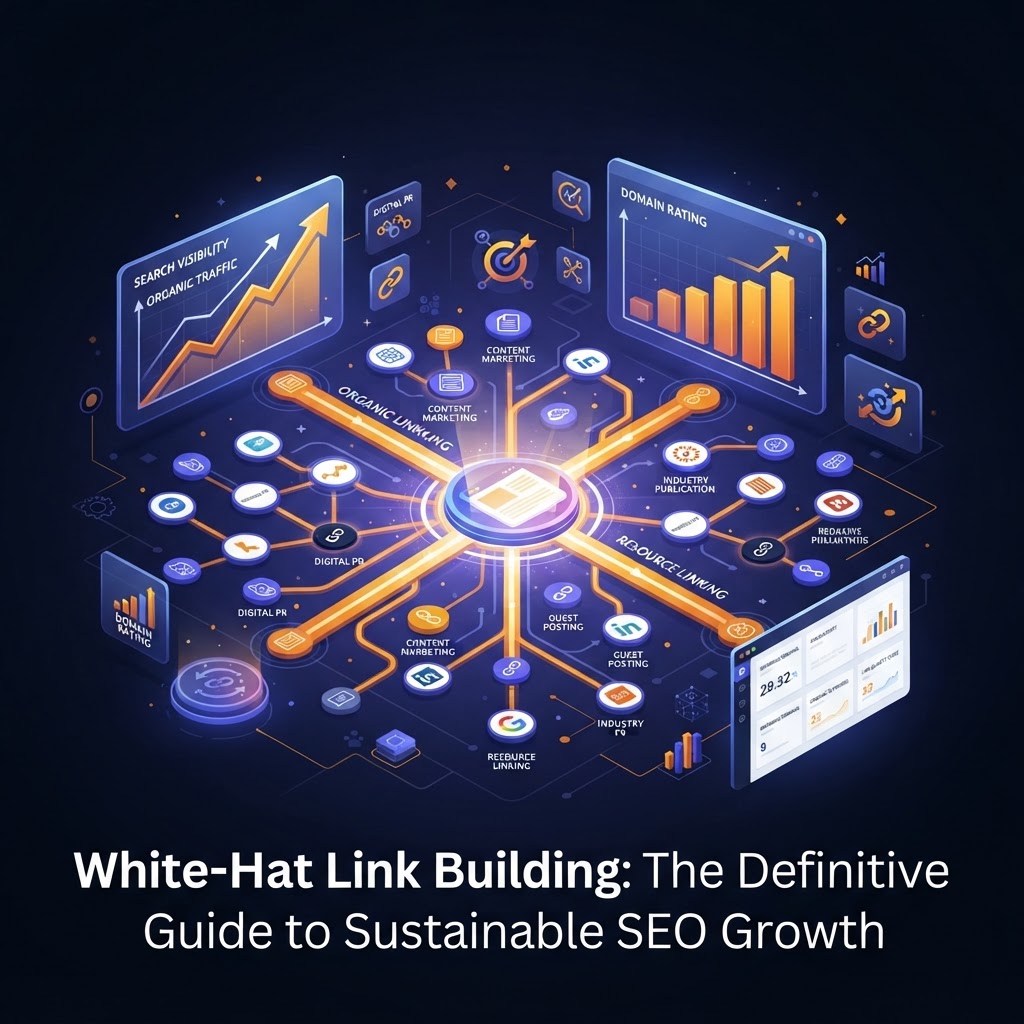
Unlike black-hat tactics (such as PBNs or link farms) or gray-hat tactics (which sit in a risky middle ground), white-hat strategies focus on editorial placement. This means a third-party site links to you because your content enhances their own, not because of a financial transaction or a manipulative scheme.
The Three Pillars of a Quality Link
- Relevance: Does the linking site share a topical connection with yours?
- Authority: Does the linking domain have a history of trust and high-quality traffic?
- Placement: Is the link contextual (within the body of the article) rather than buried in a footer or sidebar?
1. Data-Driven Storytelling (Original Research)
If you want to earn links from top-tier publications like Forbes, The New York Times, or industry leaders, you must provide something they don't have: original data.
Journalists and bloggers are constantly looking for statistics to validate their claims. By conducting original research, surveys, or data analysis, you become the primary source. When others cite your data, they naturally link back to you as the originator.
How to Execute:
- Identify a Gap: Use tools like Ahrefs or Semrush to find trending topics in your niche that lack hard data.
- Collect Data: Run a survey using your email list, analyze public datasets, or use proprietary internal data (anonymized).
- Visualize: Create charts and infographics. Long-form content with visual data earns significantly more links than text-only articles.
- Outreach: Reach out to journalists who have written about similar topics, offering them a "first look" at your findings.
Real-World Example: A SaaS company analyzing 1 million social media posts to find the best time to post will earn hundreds of links from marketing blogs that need to cite those specific times.
2. The "Skyscraper 2.0" Technique
The original Skyscraper Technique involved finding a popular piece of content, making it longer, and reaching out to the same people who linked to the original. In 2025, "longer" isn't enough. You must make it better.
The Upgrade Path:
- Better UX: Is the original content a wall of text? Make yours interactive or easier to navigate.
- More Current: If the top-ranking guide was written in 2022, update yours with 2025/2026 insights.
- Higher Utility: Add templates, checklists, or calculators.
When you reach out to site owners, your pitch isn't "my article is longer," but rather "my article provides a more comprehensive and up-to-date resource for your readers."
3. Digital PR and Reactive Outreach
Digital PR is the bridge between traditional public relations and SEO. It involves using platforms like Connectively (formerly HARO), Featured.com, or Twitter (#JournoRequest) to respond to journalists looking for expert quotes.
Why it Works:
This is a "reactive" strategy. You aren't cold-emailing people asking for a favor; you are solving a problem for a journalist who is on a deadline.
Practical Takeaways:
- Be Fast: Journalists often receive hundreds of pitches. Responding within the first 2-4 hours is critical.
- Be Concise: Don't send a 500-word bio. Give them 2-3 punchy, usable quotes and a link to your headshot.
- Focus on Expertise: Only respond to queries where you have genuine authority. A link from a high-DA site in a non-relevant niche is far less valuable than a relevant one.
4. Technical Reclamation (Unlinked Mentions)
This is perhaps the highest-ROI white-hat strategy because the "hard work" of getting the brand mention is already done.
Often, a news site or blog will mention your brand, product, or CEO but forget to include a hyperlink. Since they have already shown an interest in your brand, the conversion rate for these outreach emails is exceptionally high.
The Workflow:
- Monitor: Use Google Alerts or Brand24 to track mentions of your brand name.
- Filter: Identify mentions that do not currently link to your site.
- Reach Out: Send a polite email: "Hi [Name], I saw you mentioned [Brand] in your recent article about [Topic]. Thank you! Would you mind making that a clickable link so your readers can easily find more information?"
5. The "Helpful Neighbor" (Broken Link Building)
Broken link building is a classic white-hat tactic that relies on the principle of reciprocity. You find a dead link (404 error) on a relevant site, notify the webmaster, and suggest your own high-quality content as a replacement.
Why it’s Sustainable:
You are helping the webmaster improve their site's user experience and SEO by fixing a broken link. In exchange, you get a high-quality, contextual backlink.
How to Scale:
While this can be done manually, using tools to identify broken outbound links on competitor sites can speed up the process. For agencies managing multiple campaigns, platforms like AAA Backlinks can help streamline the content creation side, ensuring you always have a high-quality "replacement" article ready to suggest.
Measuring Success: Beyond Domain Authority
While metrics like Domain Rating (DR) or Domain Authority (DA) are useful benchmarks, they are third-party approximations. A truly successful white-hat campaign should be measured by:
- Referral Traffic: Are people actually clicking the link?
- Keyword Rankings: Is your target page climbing the SERPs for its primary keywords?
- Brand Signals: Are you seeing an increase in branded searches following a Digital PR campaign?
Sustainable link building is a marathon. Most campaigns take 3 to 6 months to show meaningful organic traffic gains because search engines need time to crawl and weight these new signals.
Key Takeaways
- Value First: Every link should be the result of providing value to the linking site’s audience.
- Diversify: Don't rely on a single tactic. Mix original research with reactive PR and technical reclamation.
- Relevance Over Volume: One link from a topically relevant, authoritative site is worth more than 50 links from unrelated blogs.
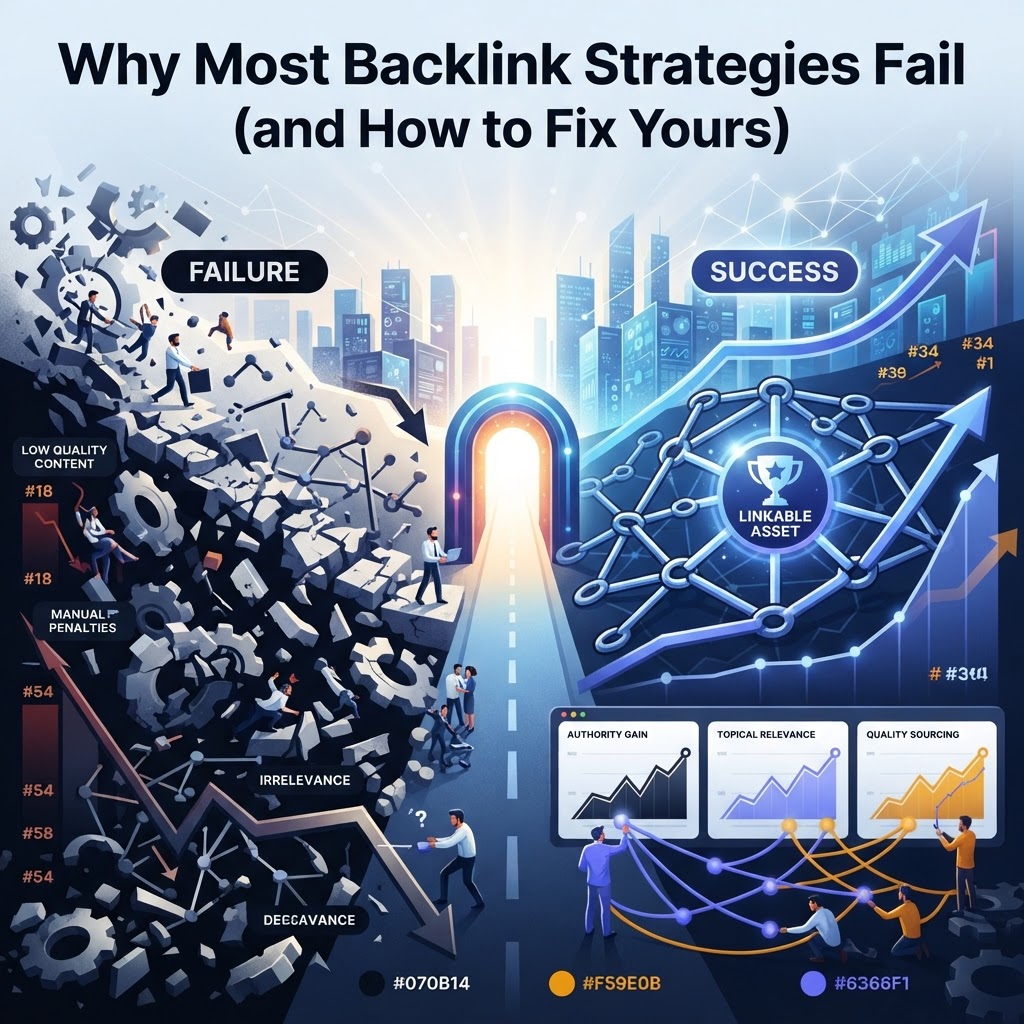
- Think Long-Term: Avoid "shortcuts" like buying cheap link packages, which can lead to manual penalties and long-term domain damage.
Frequently Asked Questions
1. Is guest posting still considered white-hat?
Yes, provided it is done for the purpose of reaching a new audience and sharing expertise. It becomes "gray-hat" or "black-hat" when you use low-quality content, over-optimized anchor text, or post on sites that exist solely to sell links.
2. How many links do I need to rank on the first page?
There is no magic number. It depends entirely on the competition for your specific keyword. Focus on the quality and velocity (the rate at which you acquire links) rather than a specific count.
3. Can I get penalized for white-hat link building?
True white-hat link building follows Google’s guidelines, making a penalty highly unlikely. Penalties usually occur when there is a pattern of manipulative behavior, such as excessive link exchanges or participating in automated link schemes.
Tags