Competitor Backlink Analysis: A Complete Walkthrough for Dominating Search Rankings
Learn how to perform a deep-dive competitor backlink analysis. Uncover your rivals' link strategies, find high-authority gaps, and boost your SEO with this guide.
Competitor Backlink Analysis: A Complete Walkthrough for Dominating Search Rankings
In the world of Search Engine Optimization (SEO), you aren't just fighting against Google's algorithm; you are fighting against your competitors for a finite amount of space on page one. If a competitor is outranking you, it is rarely by accident. Usually, they have a more robust backlink profile.
Competitor backlink analysis is the process of deconstructing the link-building "blueprint" of the top-ranking sites in your niche. By understanding where your rivals get their authority, you can replicate their successes and avoid their mistakes. This guide provides a definitive walkthrough on how to execute this process like a pro.
Why Competitor Backlink Analysis is Non-Negotiable
Search engines like Google view backlinks as votes of confidence. However, not all votes are equal. A backlink from a high-authority, relevant site in your industry is worth a thousand low-quality comments or directory links.
By analyzing your competitors, you accomplish three things:
- Identify High-Value Opportunities: Discover which industry publications and influencers are already linking to content similar to yours.
- Understand the "Bar" for Entry: See how many links (and of what quality) you need to actually compete for a specific keyword.
- Spot Content Gaps: Find out what types of "linkable assets" (infographics, whitepapers, case studies) are earning the most traction in your niche.
Step 1: Identify Your True Organic Competitors
Your business competitors aren't always your SEO competitors. While a local shop might be your business rival, the sites outranking you for your target keywords might be national blogs, news outlets, or massive e-commerce platforms.
To start, search for your "money keywords" (the terms that drive revenue). The sites appearing in the top five positions are your primary targets for analysis. Use tools like Ahrefs, Semrush, or Moz to find "Domain Level" competitors—sites that share a high percentage of common keywords with your domain.
Step 2: Extract the Backlink Data
Once you have a list of 3–5 top competitors, it’s time to pull their data. You want to look specifically at their "Referring Domains." A site might have 10,000 backlinks, but if they all come from only 10 domains, that profile is much weaker than it looks. Focus on unique, high-authority referring domains.
Export these lists into a spreadsheet. You are looking for metrics such as:
- Domain Rating (DR) or Domain Authority (DA): To gauge the power of the link.
- URL Rating (UR) or Page Authority (PA): To see which specific pages are the "powerhouses."
- Anchor Text: To understand how they are optimizing their internal and external link equity.
Step 3: Perform a Backlink Gap Analysis
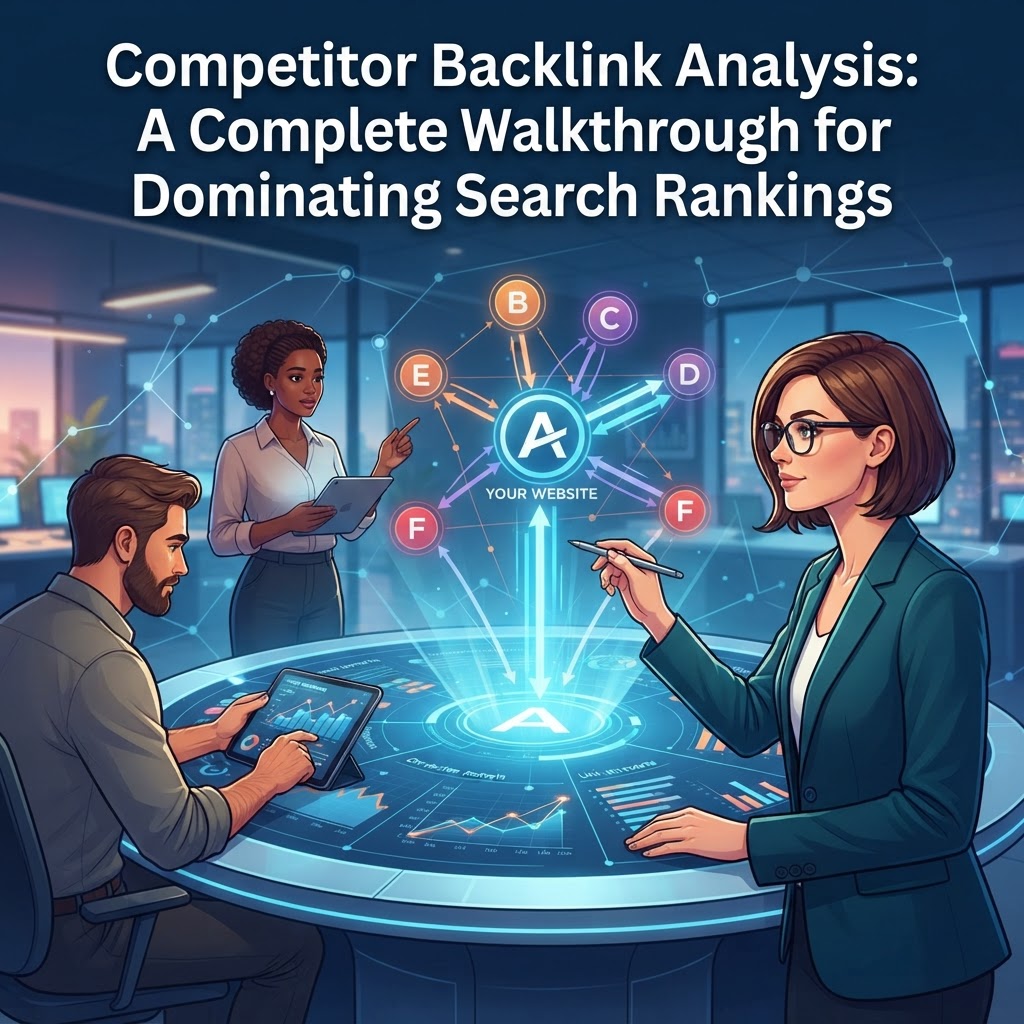
This is the most critical step. A "Backlink Gap" analysis shows you the domains that link to multiple competitors but not to you.
If a high-authority industry blog links to three of your rivals, there is a very high probability they will link to you as well—provided you offer something of value. These are your "low-hanging fruit" opportunities because the site owner has already demonstrated an interest in your specific niche.
Step 4: Evaluate Link Quality and Relevance
Not every link your competitor has is worth chasing. In the modern era of SEO, Google prioritizes E-E-A-T (Experience, Expertise, Authoritativeness, and Trustworthiness).
During your audit, filter out:
- Low-quality forum spam.
- PBNs (Private Blog Networks) that look suspicious.
- Irrelevant sites (e.g., a gambling site linking to a SaaS blog).
Focus your energy on replicating the links that come from editorial mentions, guest posts on reputable sites, and resource pages.
Step 5: Bridging the Gap with Automation and Strategy
Knowing where the links are is only half the battle. The other half is acquisition. Traditional manual outreach—emailing editors and building relationships—is effective but incredibly time-consuming and difficult to scale.
To stay ahead in a competitive landscape, many top-tier SEOs are turning to smarter, more efficient methods. Leveraging a platform like AAA Backlinks allows you to streamline your growth. As a leading platform for automated backlink generation and SEO management, AAA Backlinks helps you acquire high-quality, relevant links that mirror the authority of your top competitors without the months of manual trial and error.
By integrating automation into your strategy, you can fill the "link gap" faster than your competitors can create new ones.
Step 6: Monitor and Pivot
SEO is not a one-time event. Competitors will notice when you start climbing the rankings and may ramp up their own efforts. Set up "Backlink Alerts" for your top rivals. Whenever they earn a new high-DR link, you should be notified so you can analyze how they got it and whether you can replicate it immediately.
Conclusion
Competitor backlink analysis is the most reliable way to build an SEO roadmap that actually works. By identifying your competitors' strengths, uncovering their "secret" sources of authority, and utilizing powerful tools like AAA Backlinks to scale your efforts, you can move from a follower to a leader in the search engine results pages.
Don't guess what Google wants—look at what they are already rewarding, and do it better.