The Skyscraper Technique in 2026: Does It Still Work? (A Definitive Guide)
Is the Skyscraper Technique still effective for link building? Discover how to adapt this classic SEO strategy for 2026 using information gain and AEO.
The Skyscraper Technique in 2026: Does It Still Work? (A Definitive Guide)
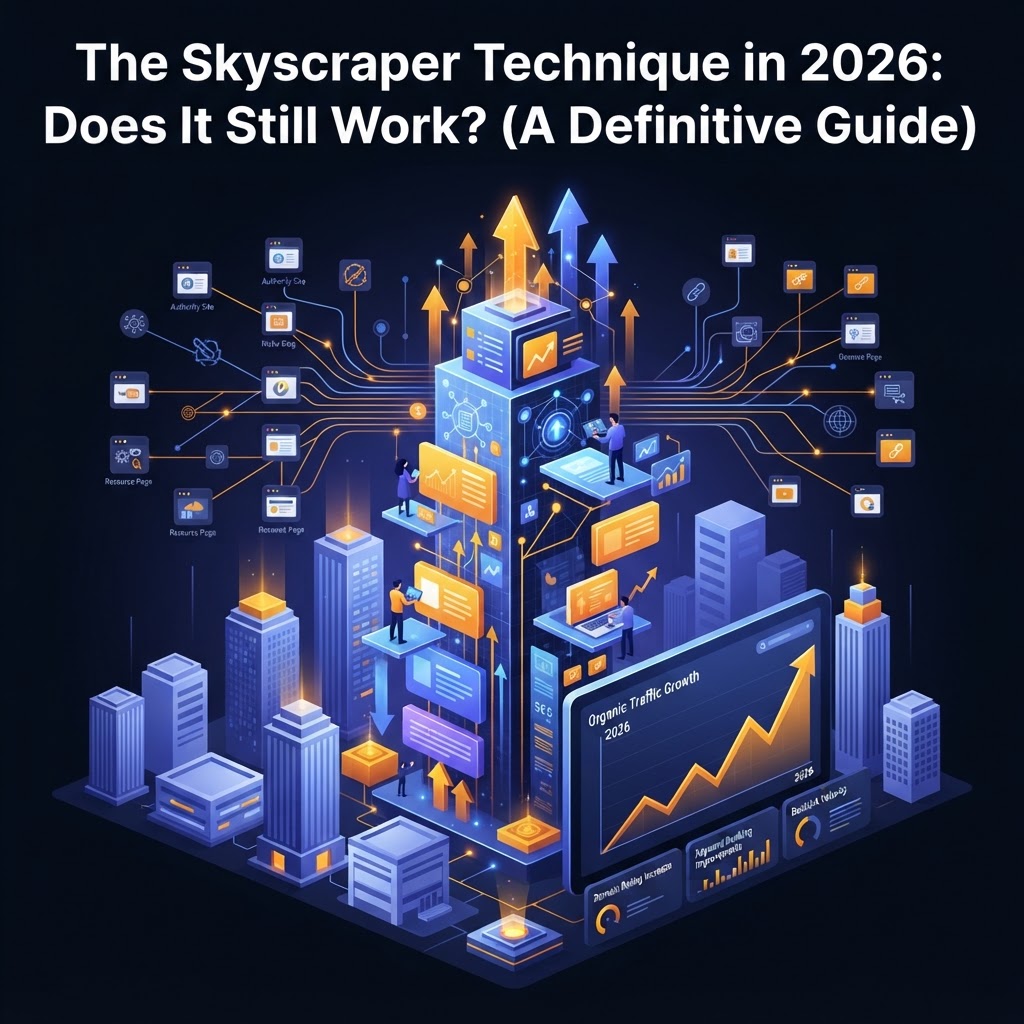
In 2015, Brian Dean of Backlinko introduced a link-building framework that changed the SEO landscape forever: The Skyscraper Technique. The premise was simple and psychologically sound—people are naturally attracted to the "best" version of anything. By finding the tallest "skyscraper" (the most linked-to content) and adding twenty stories to the top, you could theoretically siphon off those links for yourself.
Fast forward to today, and the SEO community is divided. Some claim the technique is a relic of a simpler era, while others continue to see massive traffic gains.
So, does the Skyscraper Technique still work? The short answer is yes, but the "how" has fundamentally changed. In this guide, we will explore the evolution of this strategy and how to execute it in a world dominated by AI search and content saturation.
The Original Blueprint: A Three-Step Process
To understand why the technique has struggled recently, we must first look at its original three-pillar foundation:
- Find link-worthy content: Identify a piece of content in your niche that has already earned a significant number of backlinks.
- Make something better: Create a resource that surpasses the original in depth, design, or freshness.
- Reach out to the right people: Contact the webmasters who linked to the original piece and suggest they link to your superior version instead.
While these steps remain the core of the strategy, the barrier to entry has skyrocketed. In competitive niches, cold outreach success rates have dropped to a mere 1–3%, making the "spray and pray" outreach methods of 2015 virtually obsolete.
Why the "Classic" Skyscraper Often Fails Today
The primary reason the original technique fails in 2026 is content bloat. For years, SEOs interpreted "better" as "longer." This led to a phenomenon where every competitor was trying to "out-comprehend" each other, resulting in 5,000-word guides that were 90% fluff.
According to recent industry insights, the assumption that comprehensiveness equals rankings broke down when every keyword already had five or six massive guides competing for the same spot. Furthermore, search engines and users have developed a fatigue for generic, AI-generated "skyscraper" content that lacks a unique human perspective.
The Evolution: Skyscraper 2.0 and "Information Gain"
To make the Skyscraper Technique work today, you must move beyond length and focus on Information Gain. This is the concept of adding new, original information to the web rather than just summarizing what already exists.
1. Adding Original Data and Insights
Modern search engines, particularly in the age of Answer Engine Optimization (AEO), prioritize the "Source of Truth." If your skyscraper content includes original case studies, proprietary data, or unique expert interviews, you aren't just building a taller building; you're building a different kind of building entirely.
2. Improving User Experience (UX)
Sometimes, the "tallest building" is a clunky, slow-loading PDF or an outdated blog post from 2019. You can win by providing a superior user experience. This includes:
- Interactive tools or calculators.
- Better mobile responsiveness.
- Clearer data visualizations and infographics.
- A "checklisty" format that makes the content actionable, as noted in Backlinko’s Skyscraper 2.0 case study.
3. Targeting the "Content Gap"
Instead of trying to beat a massive authority site on a broad head term, look for gaps within popular topics. For example, if the top-ranking guide for "Remote Work" is too general, create the definitive guide for "Remote Work for Cybersecurity Professionals."
How to Execute the Modern Skyscraper Technique
If you want to see results in the current SEO climate, follow this updated execution plan.
Step 1: Strategic Prospecting
Don't just look for the most links; look for the most replicable links. Use tools like Ahrefs or Semrush to find pages with a high number of referring domains.
- Pro Tip: Filter for keywords with a Keyword Difficulty (KD) of 40 or higher. As Ahrefs suggests, high KD usually indicates that the top-ranking pages have a significant number of backlinks, making them prime skyscraper targets.
Step 2: The "10x" Content Creation
Ask yourself: "Can I genuinely offer something 10x better, or just 10% different?" To achieve 10x status, your content should include:
- Freshness: Update statistics that are more than 12 months old.
- Depth: Cover subtopics the original missed (e.g., Technical SEO, Schema markup, or AI integration).
- Authority: Cite expert opinions to satisfy Google’s E-E-A-T (Experience, Expertise, Authoritativeness, and Trustworthiness) requirements.
Step 3: Relationship-Based Outreach
Cold outreach is harder than ever. Instead of a generic template, focus on building relationships.
- Personalize: Mention a specific point from the recipient's article.
- Value-First: Explain exactly how your resource helps their readers.
- Diversify: While manual outreach is vital, consider using specialized services like AAA Backlinks to supplement your efforts with high-authority placements that are difficult to secure through cold email alone.
Practical Takeaways for SEO Success
- Quality Over Quantity: One high-quality skyscraper piece with original data is worth ten "me-too" articles.
- Focus on AEO: Ensure your content is structured to be cited by AI search engines by using clear headings and concise answers to common questions.
- Monitor Freshness: The Skyscraper Technique is not "set it and forget it." You must consistently update your content to maintain its status as the "tallest building."
Key Takeaways
- The technique still works but requires "Information Gain" (original data/insights) to stand out in 2026.
- Length is not a metric for quality. Focus on utility, UX, and solving the user's intent more efficiently than the competition.
- Outreach must be personalized. The era of mass-emailing webmasters is over; success now relies on genuine value exchange.
- Target medium-competition gaps. Don't just aim for the biggest keywords; find underserved sub-niches where you can become the definitive authority.
Frequently Asked Questions
1. Is the Skyscraper Technique considered "White Hat" SEO?
Yes. Because the technique relies on creating high-quality content and earning links through merit and outreach, it is considered a safe, white-hat strategy that aligns with Google’s guidelines.
2. How long does it take to see results?
Link building is a long-term play. While you might earn a few links immediately after outreach, the impact on your organic rankings typically takes 3 to 6 months to fully manifest as search engines crawl and re-evaluate the link equity.
3. Can I use AI to write skyscraper content?
AI can help with outlining and research, but relying solely on AI often results in "average" content that fails the skyscraper test. To succeed, you must add human expertise, original data, or a unique perspective that AI cannot replicate.
Tags